
Lineage To Legacy
The Apollo is shaped by its audience as much as it is shaped by its artists: from the stars on stage to the unheralded hands that cared for the heartbeat of Black music, and the communities that protected it.
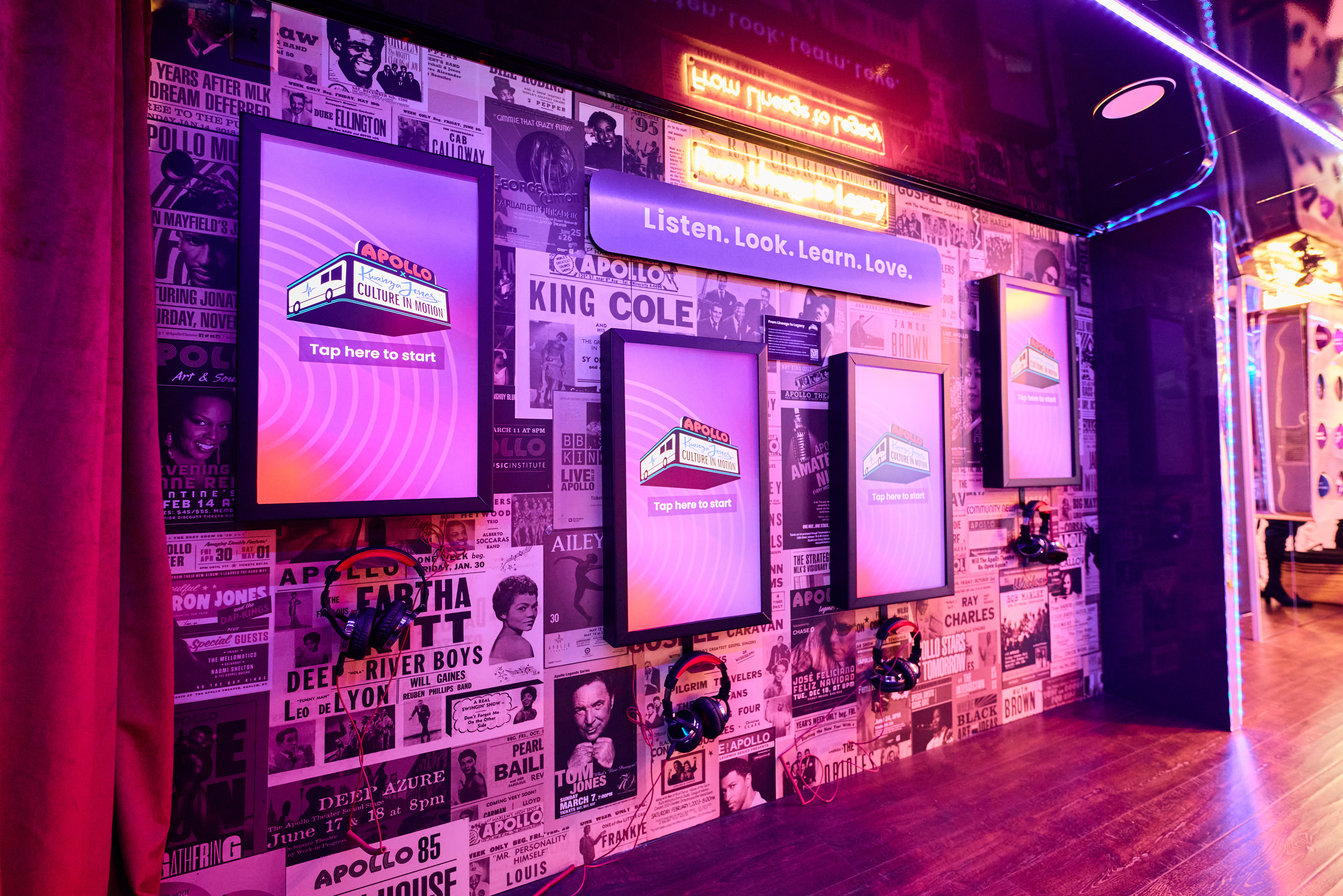
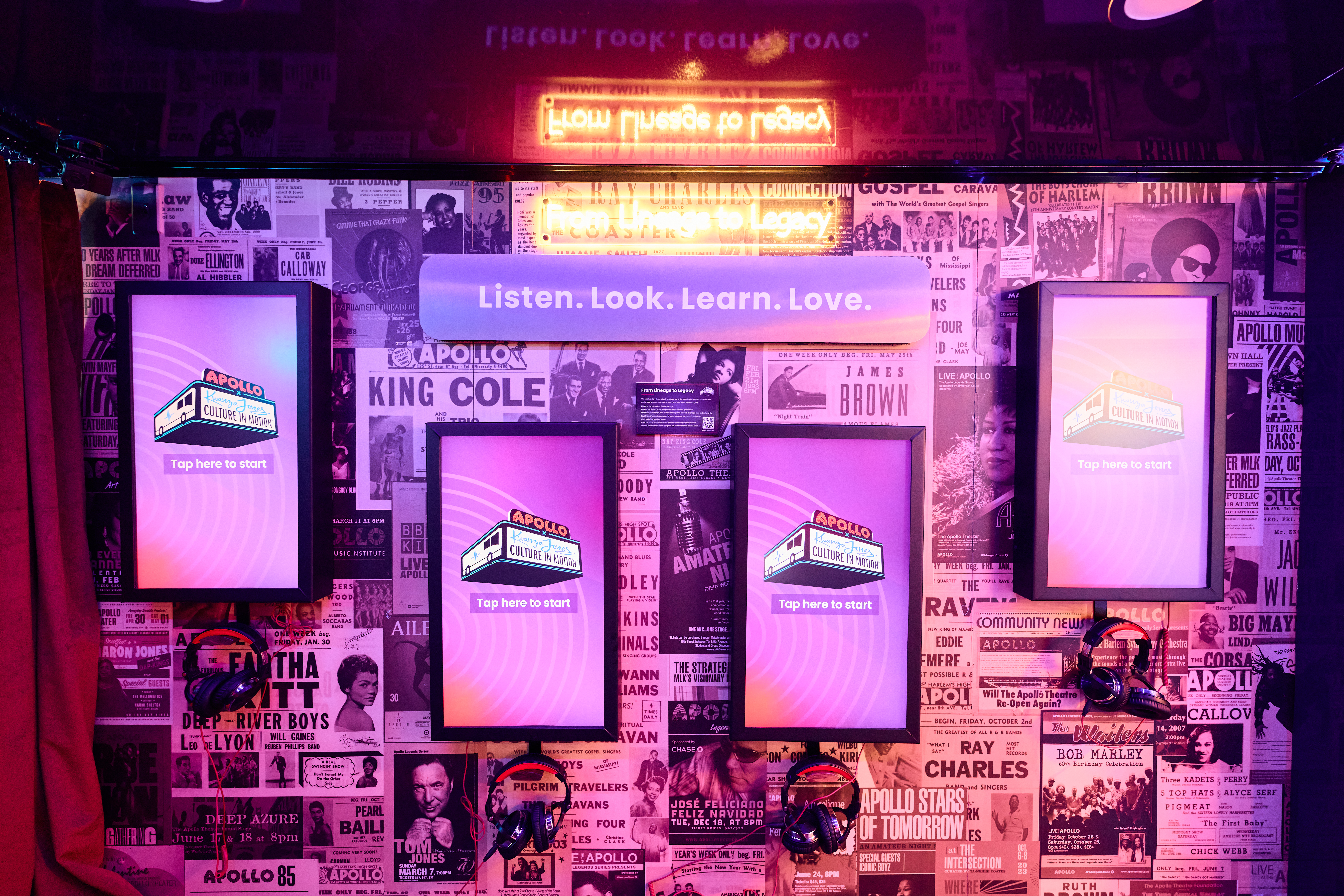
Each screen offers a different way of connecting to the Apollo.
At The Apollo, culture is always in motion.
It moves through voices, rhythms, laughter, and calls to action that have shaped generations.
It witnessed Harlem’s Black entrepreneurial swag.
It experienced the evolution of confidence, posture, and presence, from the liberation energy of the past to the remixed movements of today.
This is what culture looks like when it’s alive.
For almost a century, The Apollo has transformed the act of listening into a shared experience.
From the delivery of a joke to the weight of a political voice, and the roar of James Brown declaring, “Say it loud.”
It’s the anticipation before the sound breaks.
The cheers when it lands.
The boos when it doesn’t.
This is listening as participation.
A shared charge that turns spectators into contributors.
The Apollo has never been isolated from the world outside its doors.
Artists who stood on its stage often carried their voices into broader cultural and civic life—through activism, organizing, storytelling, and leadership.
Music and performance became tools for education, resistance, and change.
The Apollo didn’t just showcase culture. It helped shape how culture spoke back to the world.
These are voices shaped by gratitude, memory, and belonging.
They speak of what The Apollo means to them, and what they mean to it in return. It is a shared love letter.
From The Apollo to the people.
From the people to The Apollo.
What began as a shared experience became a lasting legacy.
The Apollo’s story lives on because people listened closely, showed up fully, learned deeply, and loved generously.
That is how culture lasts.